STEINWERT / ALGARVE

FACTS & CARE / ALGARVE

Understand stone. Clean gently. Protect appropriately.

Dark deposits along a pool edge, stains in a holiday home or dull traffic areas: not every change is dirt. This guide helps Algarve property owners assess the appropriate cleaning, restoration and care for their surfaces.

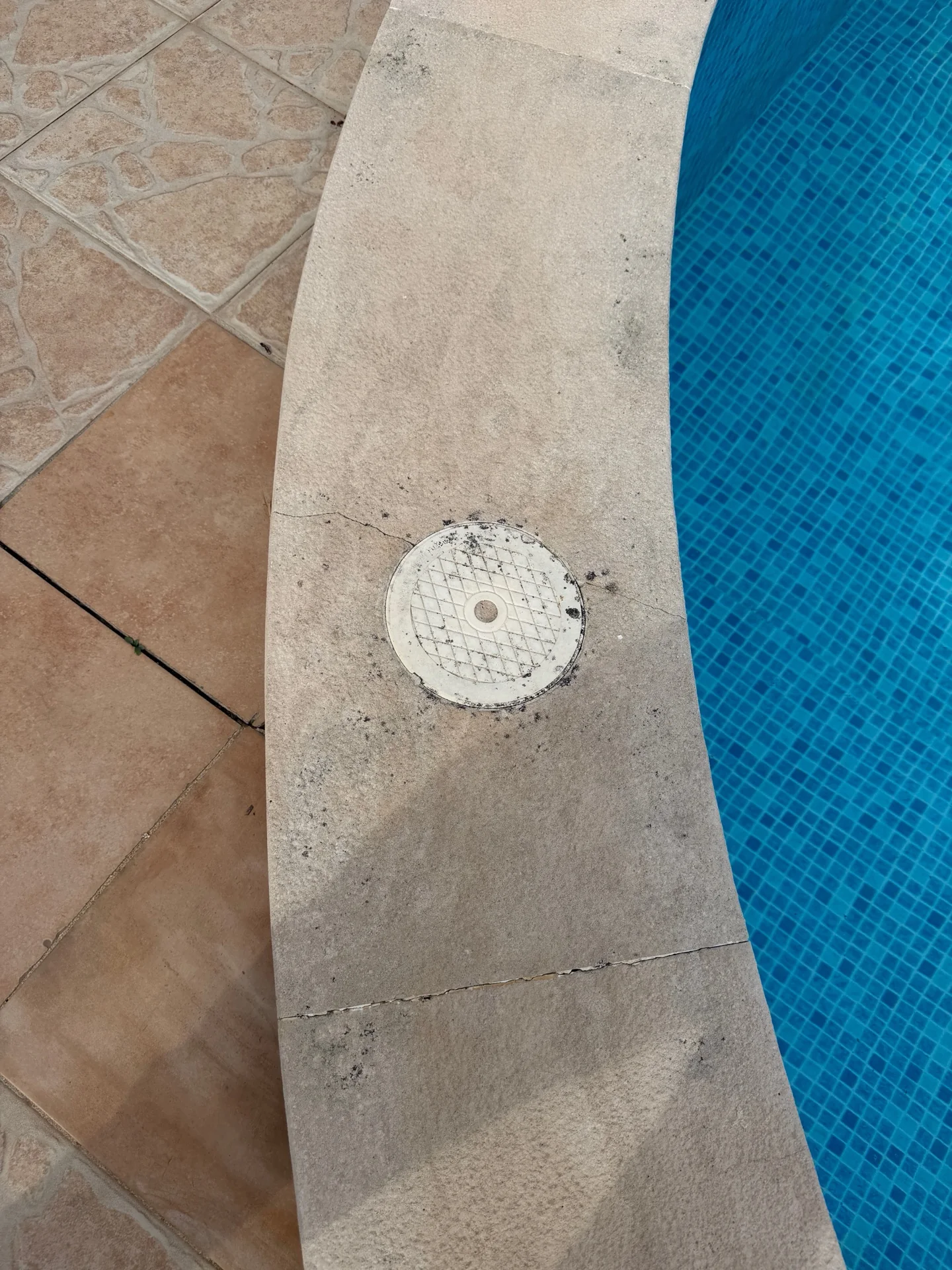
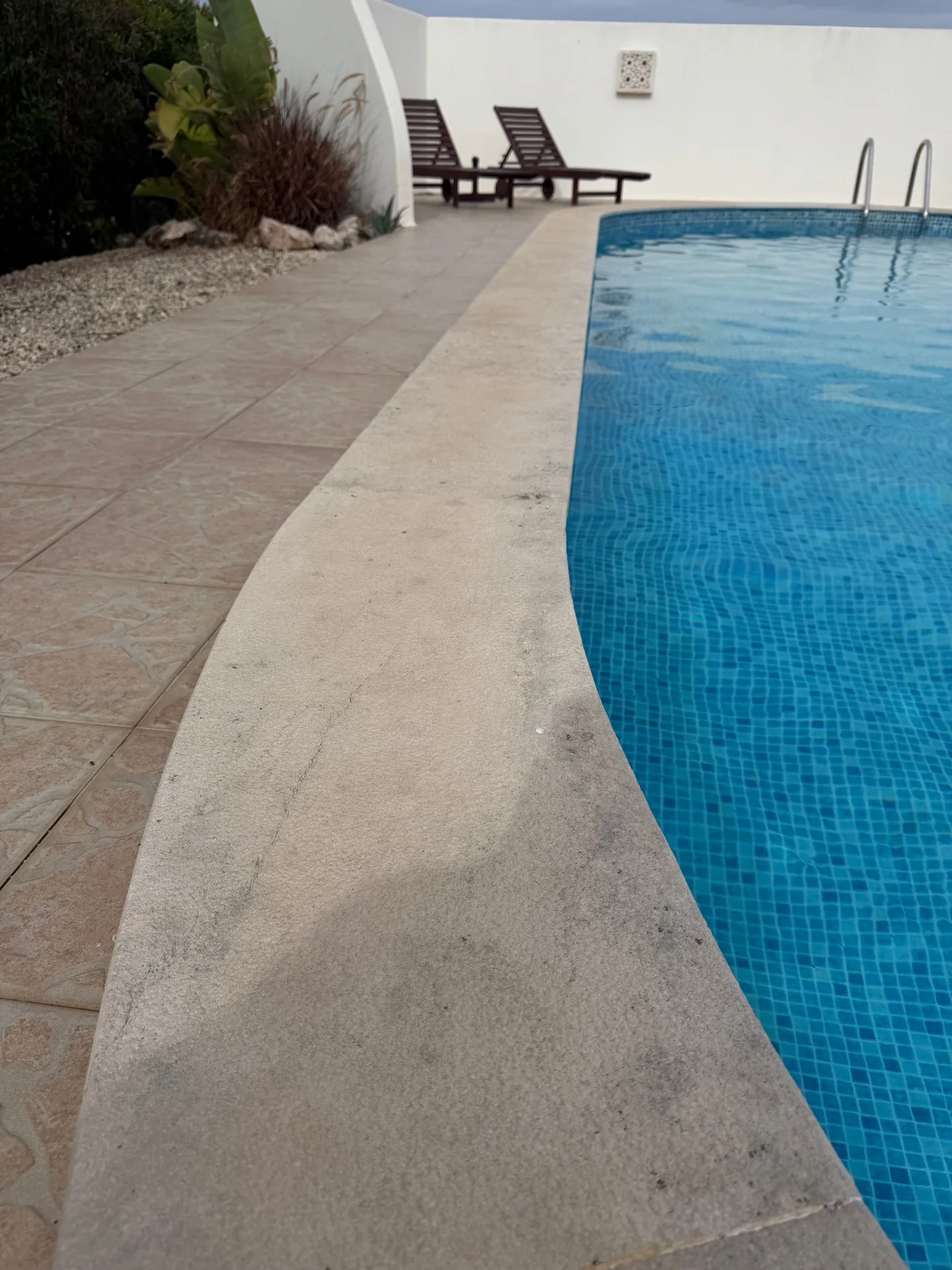
User-provided photograph of a pool with a light-coloured stone edge and adjoining terrace areas
Original photograph: pool edge and terrace. Material, cause and treatment cannot be determined reliably from a single image alone.

01 / FACTS

What do you notice on your surface?

Choose the area. These notes are guidance, not a remote diagnosis or approval for a cleaning product. The material, finish, joints and the cause of the change are what matter.

6 care topics shown

Green deposits, dark spots and algae

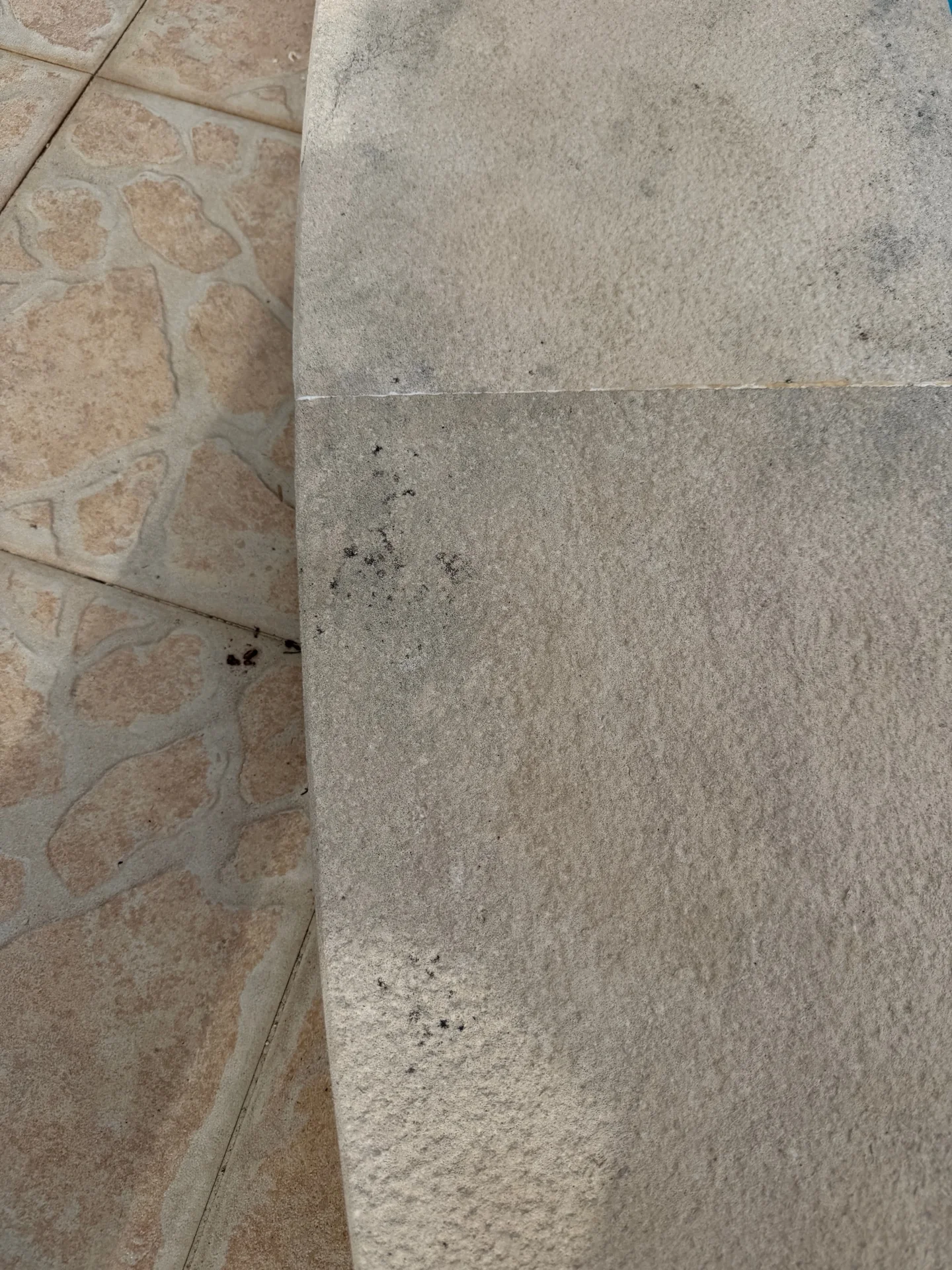
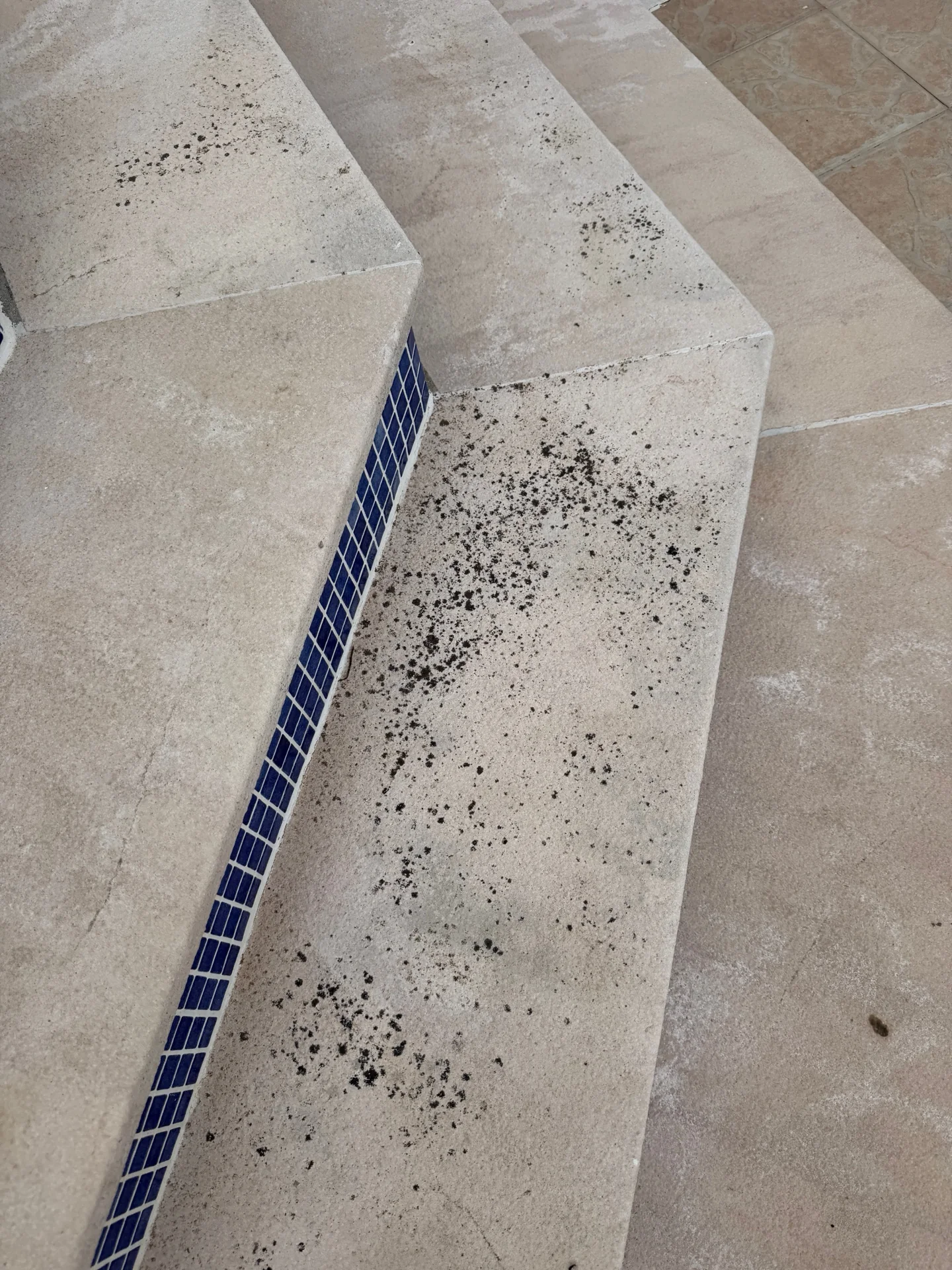
How to recognise itGreen or dark deposits may be associated with biological growth. Black spots alone prove neither algae nor lichens; wet deposits can also reduce slip resistance.

What we assess and treat

We assess the surface, moisture, joints and an inconspicuous test area. The aim is the mildest effective, material-compatible cleaning method. A suitable professional product is considered only with the appropriate approval and in compliance with environmental requirements.

How the surface is protected

Drainage, regular care and surface protection tailored to the need can make maintenance easier. An impregnating sealer does not guarantee that growth will never return.

What to avoid

No wire brushes, no uncontrolled high-pressure cleaning and no self-mixed chlorine or biocidal products. Cleaning water must not be allowed to run uncontrolled into the pool or garden.
White haze and salt efflorescence

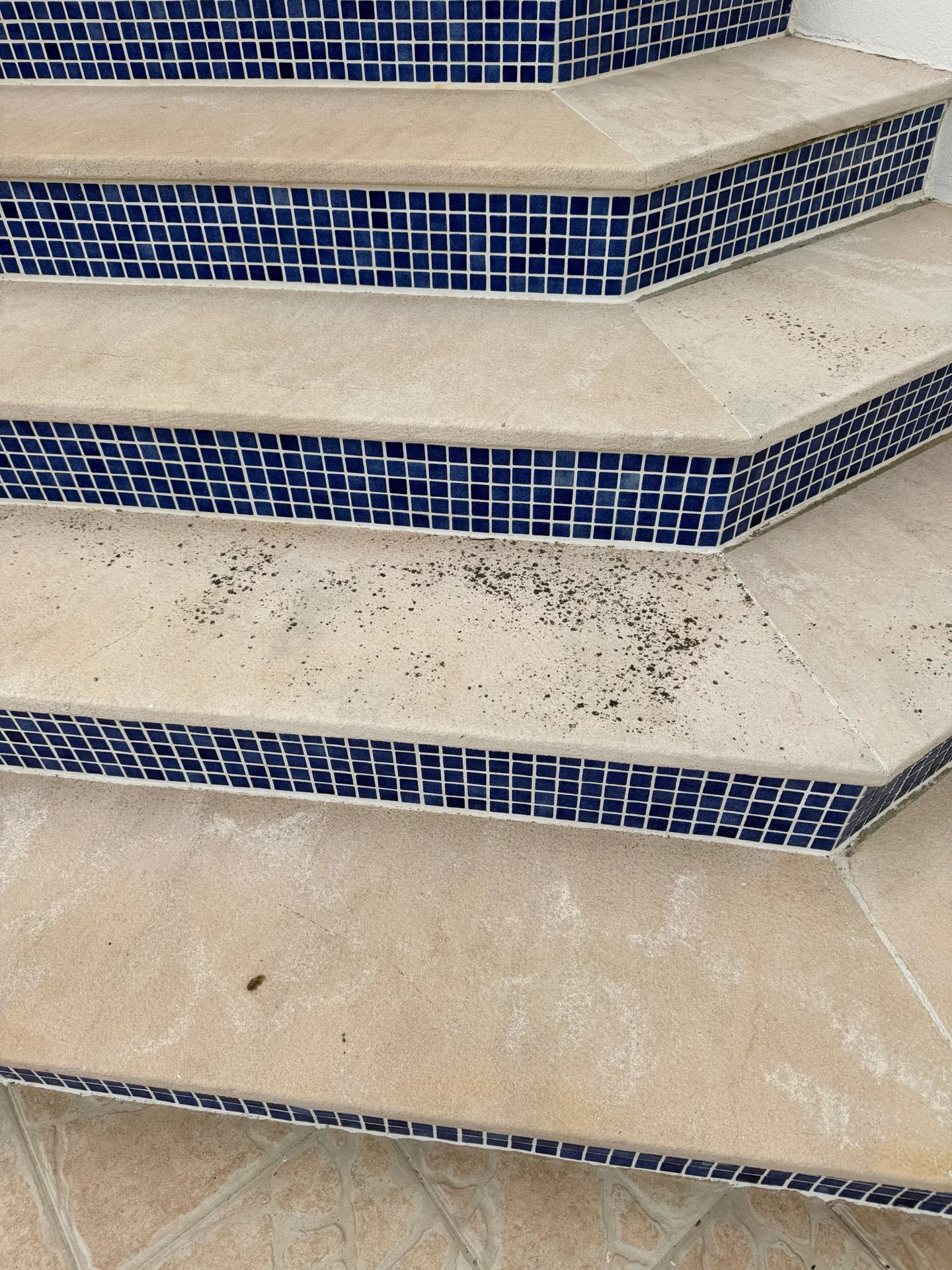
How to recognise itWhite, powdery deposits can occur when water carries dissolved salts to the surface and evaporates. Limescale marks and other residues can look similar. Algal growth is not salt efflorescence.

What we assess and treat

The residue is identified first. Confirmed loose salt efflorescence can often be removed dry. Where deposits recur, moisture paths and the build-up are assessed rather than treating only the visible haze.

How the surface is protected

First establish the cause of the moisture and allow the surface to dry sufficiently. Protective products must suit both the stone and the drying of the build-up; an impregnating sealer is not a substitute for waterproofing.

What to avoid

Do not use vinegar or an arbitrary limescale remover. Acid can attack limestone, marble, cementitious joints and other sensitive components.

Rough surfaces, weathering and cracks

How to recognise itAn uneven surface may be natural texture, dirt or a material change. Open cracks, loose edges or spalling, however, are reasons to take a closer look.

What we assess and treat

We distinguish contamination from loss of material and assess moisture, drainage, perimeter joints and movement joints. Suitable surfaces can be cleaned or restored; cracks and loose parts require separate repair planning.

How the surface is protected

Protection follows only after the cause has been established and appropriate repairs have been made. On walking and wet areas, the finish and slip resistance must work together; a glossier result is not automatically the right one.

What to avoid

Do not seal damp or salt-contaminated surfaces. Do not treat cracks as merely a cleaning issue, and do not polish pool edges smooth without assessment.

Stains, grease, drinks and cleaning residues

How to recognise itA dark stain may have penetrated an absorbent material; a smeary film may result from residues. Dull rings on marble or limestone after acidic drinks may be etching—not surface dirt.

What we assess and treat

The material, type of stain and existing finish are identified first. Tailored cleaning or stain treatment may help; a chemically attacked surface may require professional restoration. Complete removal is not always possible.

How the surface is protected

Where suitable, absorbent natural stone receives appropriate stain protection. Deal with spills promptly and use coordinated care products. An impregnating sealer does not protect against acid etching.

What to avoid

Do not use universal stain removers, abrasive products or acid on sensitive stone. Do not mix several cleaners, and do not apply care layers haphazardly on top of one another.

Scratches, metal marks and dull traffic areas

How to recognise itDark streaks on ceramic can be surface metal marks. Genuine scratches, dull etched areas or damaged glazes are changes to the material and cannot simply be wiped away.

What we assess and treat

For suitable natural stone or terrazzo, grinding, honing or polishing can renew the finish; the material, build-up and thickness of the layer are decisive. With ceramic, metal marks are distinguished from genuine damage. A damaged glaze cannot generally be sanded.

How the surface is protected

Clean entrance mats, regular removal of sand and suitable furniture glides reduce mechanical stress. After restoration, only protection suitable for the specific surface is renewed.

What to avoid

Do not use abrasive pads on glazed tiles or promise blanket scratch removal. Deeper damage or an unsuitable build-up may require repair or replacement.

Dark joints and soiled perimeter joints

How to recognise itJoints can absorb dirt, care residues or biological growth. Cementitious joints, resin joints and flexible silicone joints serve different purposes and respond differently to cleaning.

What we assess and treat

The joint type and adjoining covering are assessed. Suitable joint cleaning removes releasable residues; cracked, loose or leaking flexible joints must be professionally renewed. Cleaning does not restore their sealing function.

How the surface is protected

Keep joints clean, remove residues carefully and inspect perimeter areas regularly. An approved protective treatment may be useful for absorbent joints; movement joints remain flexible and functional.

What to avoid

Do not use acid or hard brushes as a universal solution. A stone cleaner is not automatically compatible with joints. Do not rigidly rework movement joints or regard them as repaired through surface protection.

02 / Material notes

Four material groups. Four different decisions.

Even when surfaces look similar, cleaning and protection depend not on colour, but on the actual material and existing surface finish.

01

Natural stone & stone surfaces

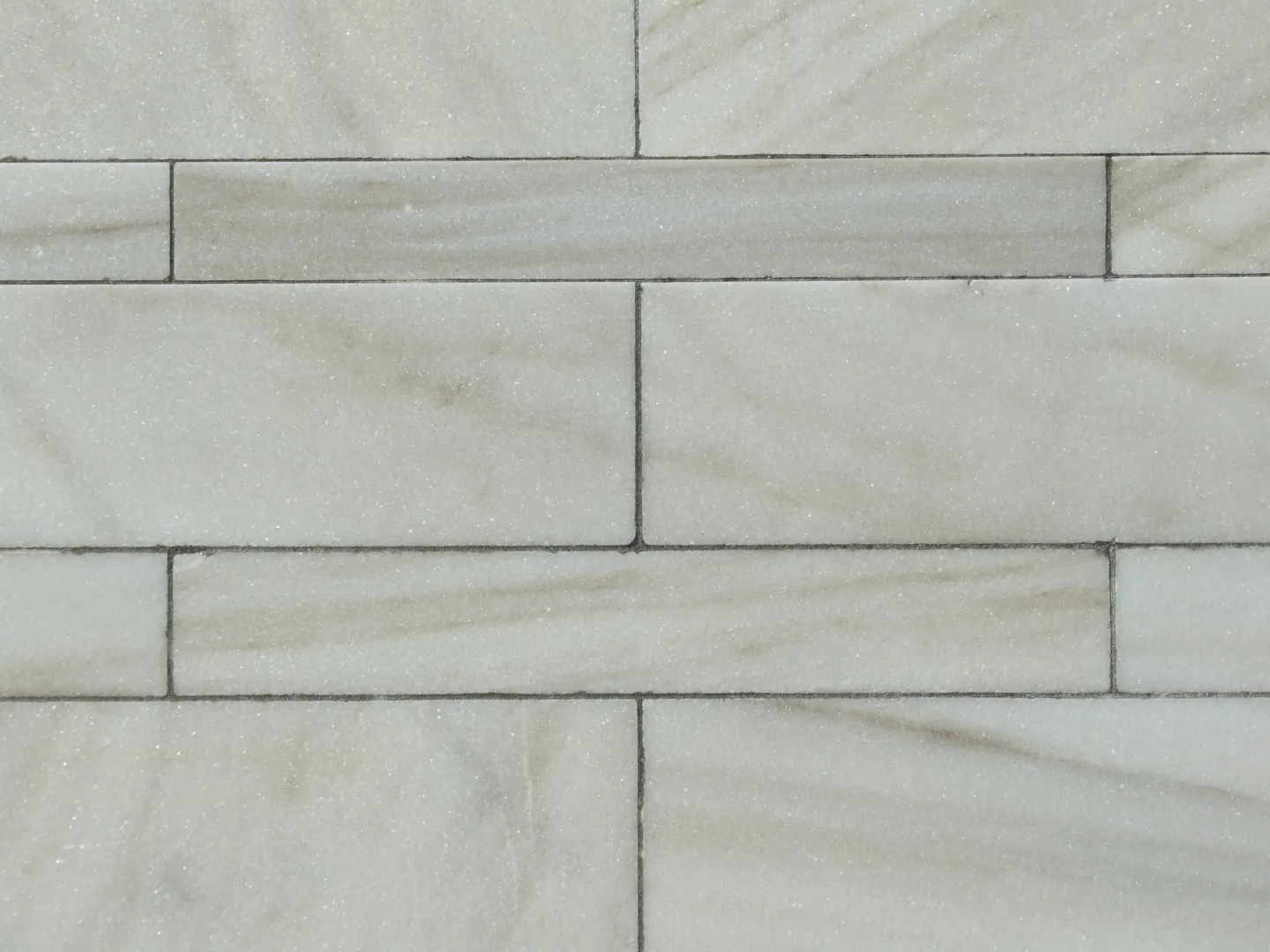
Limestone, marble, granite and other stones differ in acid sensitivity, absorbency and finish. Do not equate mineral natural stone with engineered stone or a ceramic stone look. Identify first, then clean or restore.

02

Ceramic & porcelain stoneware

Glazed, polished or textured: these surfaces need different care. Metal marks may be removable; damaged glaze is not. Many ceramic surfaces do not need impregnating sealers; specialist polished products require manufacturer approval.

03

Terrazzo

The binder, aggregate, existing layer and finish determine cleaning and possible restoration. Do not treat Venetian terrazzo, cement terrazzo and resin terrazzo as generally the same. With suitable build-ups, regrinding or a coordinated finish may be appropriate.

04

Exposed screed & coated floors

Cementitious screed, calcium-sulphate screed and coatings are not a single material group. Water compatibility, cleaning and protection are specified according to the system and finish. Construction documents or a sample help with identification.

RENOVATING EXISTING HOMES · PRIVATE USE & HOLIDAY LETS

Renovate your villa. Terrazzo with electric floor heating.

Bought an older holiday home in the Algarve? If the floors are already due for replacement, design and warmth can be planned together: VIA terrazzo with electric underfloor heating as a coordinated flooring concept for your own home or its next holiday-rental chapter.

Important: the specific heating system must be agreed with VIA Application Engineering before work begins. Bathrooms and wet zones also need the appropriate waterproofing and an approved assembly.

Warm feet add comfort, but do not automatically mean lower bills. Heat demand, insulation, occupancy and the electricity tariff determine running costs. Solar PV does not guarantee year-round or overnight coverage of heating electricity.

05 / Process

Assess first. Then clean. Then protect appropriately.

01

1 / Classify the surface

Overview images, detail photos, property location and material information help with the initial assessment. Before work begins, the build-up, condition and context are assessed.

02

2 / Agree a gentle method

A test area clarifies effectiveness and compatibility. Cleaning, stain treatment or restoration are selected to suit the surface.

03

3 / Restore where it makes sense

Removable deposits are taken away; suitable stone or terrazzo surfaces can be professionally restored. Damage from cracks, joints or moisture is handled separately.

04

4 / Hand over protection & care

After appropriate drying and approval, suitable protection and clear care instructions follow. Scope and intervals are coordinated with use and condition.

/ FAQ

Frequently asked questions about stone and floor care

Are the black spots in the photos definitely algae?

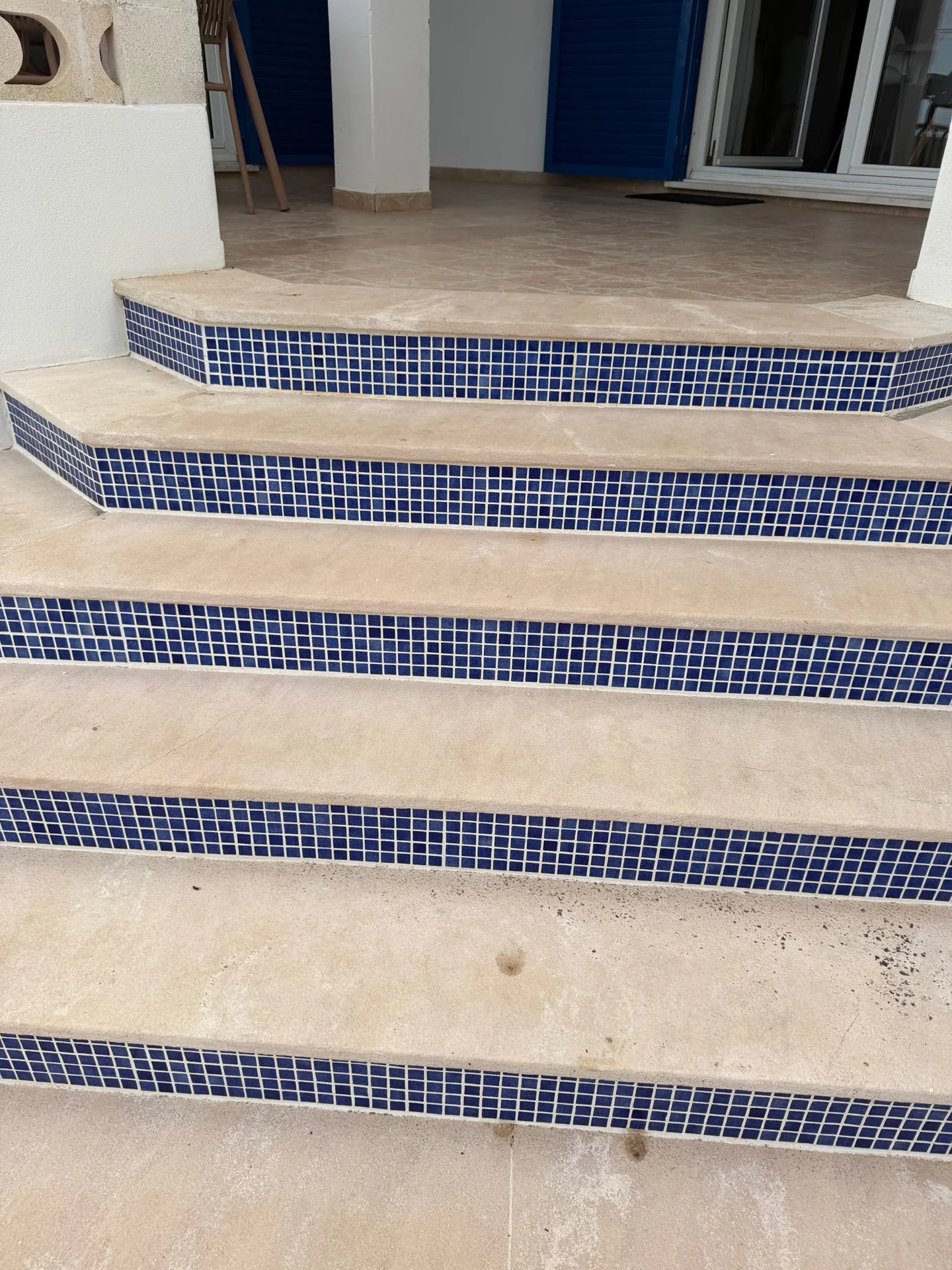
No. They may be associated with biological growth, but can have other causes too. The photos are guidance. For a reliable assessment, the material, moisture, surface and, where appropriate, a test area are examined.

Is efflorescence the same as algal growth?

No. Salt efflorescence is a mineral residue associated with water transport and evaporation. Algae and lichens are biological deposits. Each requires a different investigation of the cause and a different treatment.

Does natural stone need an impregnating sealer after every cleaning?

Not automatically. It depends on the material, absorbency, existing protection and condition. Appropriate protection can make care easier, but it neither eliminates cracks or moisture sources nor prevents acid etching.

Can all stains and scratches be removed?

No. Removable residues, absorbed stains, acid etching and genuine scratches are different cases. Depending on the surface, cleaning, restoration, repair or replacement may be appropriate; a complete result cannot be guaranteed in general.

Do ceramic and joints need the same cleaner?

Not necessarily. The cleaner must be approved for both the covering and the joint type present. Cementitious, resin and silicone joints are treated differently; damaged silicone joints must be renewed.

What should I send for an initial assessment?

An overview of the surface, sharp detail photos, the property location, approximate area and any known material information. Details of previous cleaning, recurring dampness and the preferred time window between rentals are helpful. Please do not send sensitive personal or guest data.

/ SOURCES

Technical references for further reading

These notes combine professional guidelines for gentle stone care with manufacturer information for the respective material groups. General guidance is no substitute for approval for a specific stone, joint material or pool construction. Current as of October 2026.

  1. [1]National Park Service – Cleaning masonry: diagnosis and gentle methods
  2. [2]Historic England – Control of biological growth on masonry
  3. [3]Natural Stone Institute – Stains, etching and efflorescence
  4. [4]Lithofin – Protect natural stones with impregnations
  5. [5]Lithofin – Cleaning, protecting and maintaining natural stone
  6. [6]Klindex – Surface polishing and restoration systems
  7. [7]Daltile – Ceramic and porcelain tile care instructions
  8. [8]MAPEI – UltraCare grout cleaner: cementitious and epoxy grout
  9. [9]MAPEI – Mapesil GP: elastic silicone joints

STEINWERT / ALGARVE

Your surface needs the right treatment—not the strongest cleaner.

Send an overview, detail photos and the property location. We will clarify the next steps for cleaning, restoration and suitable protection for your Algarve holiday property. An initial photo assessment does not replace an inspection before work is carried out.